 Balanced Health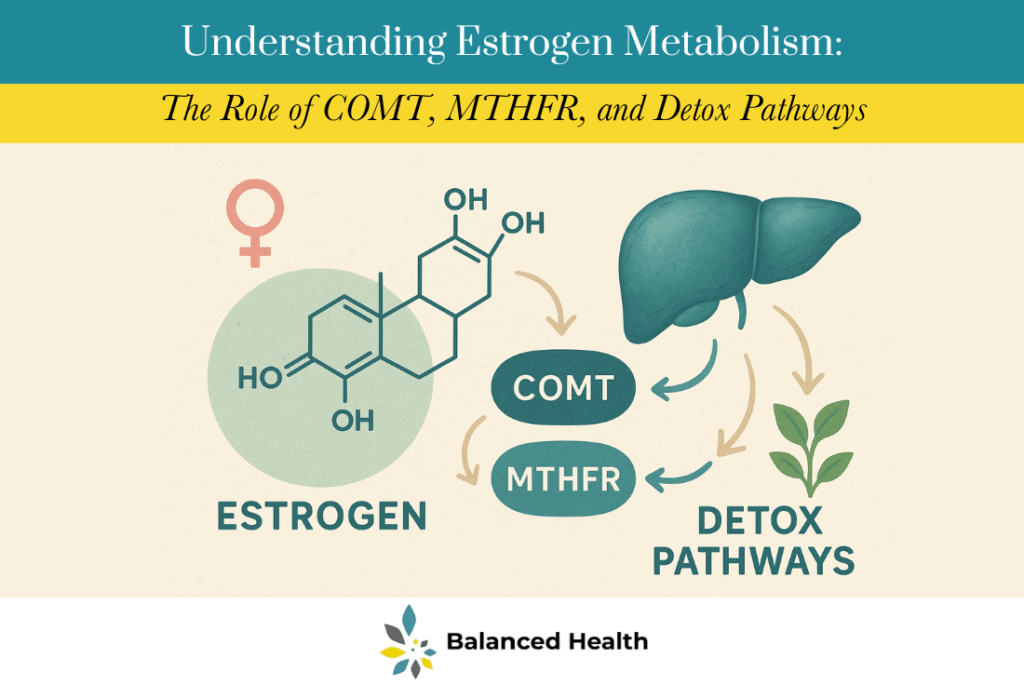
By Balanced Health | Advanced Clinical Insights
Introduction
If you’ve ever experienced unexplained fatigue, PMS, mood swings, weight gain, or estrogen-related symptoms—even with “normal” hormone levels—your issue may not be hormone production but hormone metabolism. At Balanced Health, we dive deeper than standard labs to examine the genetic and biochemical pathways that influence how your body processes hormones, especially estrogen.
In this blog post, we unpack the complex science of estrogen metabolism and explore the crucial roles of COMT, MTHFR, and detoxification pathways in maintaining hormonal balance, reducing disease risk, and supporting overall health.
🔬 What Is Estrogen Metabolism?
Estrogen metabolism is the process by which the body breaks down and eliminates estrogen after it’s been used. This process is just as important as estrogen production. Estrogen must be metabolized properly to maintain healthy tissue function and avoid harmful accumulation or conversion into more aggressive estrogen metabolites.
The three primary phases of estrogen metabolism are:
- Hydroxylation (Phase I) – In the liver, estrogens are converted into three main metabolites: 2-OH, 4-OH, and 16α-OH estrogens.
- Methylation (Phase II) – Protective methyl groups are added to make estrogen metabolites less reactive and easier to excrete.
- Excretion (Phase III) – The body eliminates these metabolites via bile and urine, supported by gut health and detox pathways.
🧬 The Role of COMT and MTHFR in Estrogen Metabolism
COMT (Catechol-O-Methyltransferase)
COMT is a key enzyme that helps neutralize harmful estrogen metabolites, especially 2-OH and 4-OH estrogens. It does this by methylation—adding a methyl group to make these metabolites safer and less reactive.
- Slow COMT variants (due to genetics) may impair this detox step, leading to estrogen dominance, anxiety, or higher cancer risk.
- Supporting COMT activity requires methyl donors like SAMe, magnesium, and vitamin B12.
MTHFR (Methylenetetrahydrofolate Reductase)
MTHFR is crucial for the production of methyl groups needed by COMT. It converts folate into its active form (5-MTHF), which ultimately supports methylation.
- Individuals with MTHFR gene mutations (e.g., C677T or A1298C) may have reduced methylation capacity.
- This can affect estrogen detoxification, neurotransmitter balance, and DNA repair.
🌱 Detox Pathways & Estrogen
Beyond genes, your liver, gut, and microbiome play essential roles in Phase I–III estrogen clearance:
- Phase I (Liver – Cytochrome P450 enzymes): Needs nutrients like B vitamins, zinc, and antioxidants.
- Phase II (Liver – Methylation, Sulfation, Glucuronidation): Needs methyl donors, sulfur-containing foods (e.g., garlic, cruciferous vegetables), and glycine.
- Phase III (Gut – Elimination): A healthy microbiome ensures estrogen is excreted, not reabsorbed (known as estrobolome function).
Poor gut health, constipation, or dysbiosis can lead to estrogen recirculation, worsening symptoms and hormonal imbalance.
🧠 Why Estrogen Metabolism Matters
Improper estrogen metabolism can contribute to:
- PMS and PMDD
- Endometriosis
- Fibroids
- Hormonal acne
- Weight gain
- Mood swings and anxiety
- Estrogen-sensitive cancers (e.g., breast, uterine)
By understanding your genetics and supporting detox pathways, we can tailor a personalized hormone-balancing strategy at Balanced Health.
Q&A: Estrogen Metabolism and Functional Medicine
Q: Can I have estrogen dominance even if my estrogen levels are “normal”?
A: Yes. Estrogen dominance often results from how your body breaks down estrogen, not how much is produced. Poor metabolism or slow clearance can lead to symptoms even with normal blood levels.
Q: How do I know if I have COMT or MTHFR mutations?
A: Genetic testing (such as a cheek swab or blood test) can identify COMT and MTHFR polymorphisms. At Balanced Health, we offer precision testing and interpret results in a clinical context.
Q: Can diet improve estrogen metabolism?
A: Absolutely. Cruciferous vegetables (broccoli, kale, Brussels sprouts), fiber, B vitamins, and antioxidants all support healthy estrogen breakdown. We also assess your diet and supplement needs based on lab data.
Q: What tests does Balanced Health offer for estrogen metabolism?
A: We use DUTCH hormone testing, ZRT saliva panels, and DNA-based functional genomics to assess hormone levels, metabolites, and your detox pathways.
Q: Is estrogen metabolism relevant for men too?
A: Yes. Men also produce and metabolize estrogen. Poor estrogen clearance in men can contribute to weight gain, gynecomastia, fatigue, and even mood disorders.
💡 Take Control of Your Hormonal Health
At Balanced Health, we specialize in advanced functional lab testing, genetic analysis, and personalized hormone protocols. Understanding your COMT and MTHFR status helps us uncover the root causes of your symptoms and create a customized plan that supports both detox and hormone balance.
📞 Contact Us Today
Balanced Health
1819 Union St
San Francisco, CA 94123
📞 Phone: (415) 915-5454
🌐 Website: balancedhealthsf.com
Let us help you decode your hormones, balance your biology, and feel like yourself again.
Schedule your consultation today and unlock your body’s natural balance!