 Balanced Health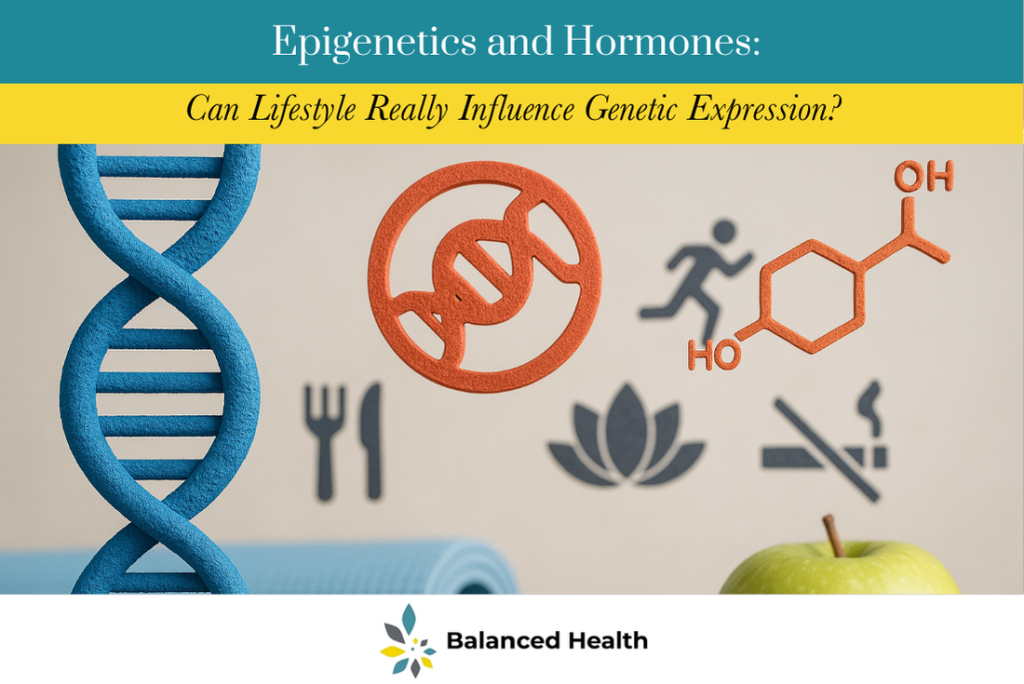
Presented by Balanced Health, San Francisco, CA
At Balanced Health, we believe in exploring the intricate connections between genetics, lifestyle, and overall wellness. One of the most compelling areas of this intersection is epigenetics—the study of how behaviors and environment can cause changes that affect the way your genes work.
While your DNA blueprint is fixed at birth, epigenetics shows us that gene expression is not set in stone. Instead, it can be influenced—turned on or off—by lifestyle choices like diet, stress, sleep, exercise, and environmental exposures. Nowhere is this more relevant than in hormonal health, where subtle shifts in gene regulation can have far-reaching effects on your mood, metabolism, energy, fertility, and more.
🌿 What Is Epigenetics?
Epigenetics refers to modifications that occur on top of your DNA—without changing the DNA sequence itself—that affect how genes are read and expressed. These modifications, including DNA methylation, histone modification, and non-coding RNA activity, serve as on/off switches or dimmers for genes.
Think of your genes as sheet music, and epigenetics as the conductor deciding which notes to emphasize, soften, or skip entirely.
🔄 Epigenetics & Hormonal Health: The Connection
Hormones are chemical messengers that regulate numerous bodily processes. Epigenetic changes can affect the enzymes, receptors, and pathways responsible for producing, transporting, and metabolizing these hormones.
For example:
- Cortisol, the body’s primary stress hormone, can become dysregulated with chronic stress, altering gene expression related to the HPA (hypothalamic-pituitary-adrenal) axis.
- Estrogen metabolism can be influenced by how certain genes like COMT, CYP1B1, and MTHFR are expressed—genes known to be epigenetically sensitive to environmental factors.
- Insulin resistance and blood sugar balance are tightly linked to epigenetic modifications influenced by diet and physical activity.
🧘♀️ Lifestyle Factors That Influence Gene Expression
Several evidence-based lifestyle factors have been shown to promote healthy epigenetic changes:
| Lifestyle Factor | Epigenetic Influence |
| Nutrition | Nutrients like folate, B12, choline, and polyphenols support methylation pathways |
| Exercise | Regular physical activity enhances insulin sensitivity and regulates genes related to inflammation |
| Sleep | Poor sleep is associated with dysregulated cortisol and impaired methylation patterns |
| Stress Management | Meditation and relaxation techniques reduce harmful stress-related gene expression |
| Toxin Exposure | Minimizing environmental toxins helps reduce epigenetic damage to hormone-regulating genes |
🧬 Personalized Medicine: The Future Is Now
At Balanced Health, we integrate epigenetic testing with functional lab analysis, including saliva, urine, and dried blood spot testing, to assess:
- Methylation capacity
- Hormone detoxification pathways
- Genetic SNPs such as MTHFR, COMT, and CYP1B1
- HPA axis resilience and adrenal function
With this data, we can create personalized wellness strategies that support optimal hormonal balance and long-term health outcomes.
💬 Comprehensive Q&A
Q: Can I really “change” my genes?
A: You cannot change the DNA sequence you were born with, but you can influence how genes are expressed through lifestyle, nutrition, and stress management. That’s the power of epigenetics.
Q: What’s the difference between genetics and epigenetics?
A: Genetics is the blueprint; epigenetics is how that blueprint is read and executed. While your genes are inherited, your environment and choices influence whether those genes are active.
Q: How do stress and cortisol affect my hormones epigenetically?
A: Chronic stress alters cortisol rhythm and impacts gene expression involved in the HPA axis, potentially leading to hormonal imbalances such as fatigue, anxiety, and poor sleep.
Q: How can I find out if I have methylation or detox issues affecting my hormones?
A: We offer genetic and functional testing at Balanced Health that looks at key SNPs and biomarkers to assess how well your body is metabolizing hormones and managing oxidative stress.
Q: Are epigenetic changes passed on to my children?
A: Some epigenetic marks can be heritable, meaning your lifestyle choices may impact the health of future generations. This underscores the importance of proactive wellness.
🏥 Take Control of Your Health with Epigenetic Precision
Epigenetics isn’t just about disease prevention—it’s about optimizing your health potential. At Balanced Health, we combine cutting-edge science with holistic care to help you feel your best now and for years to come.
📍 Balanced Health
1819 Union St
San Francisco, CA 94123
📞 Phone: (415) 915-5454
🌐 balancedhealthsf.com
Ready to explore how your lifestyle influences your genetic expression?
Schedule your personalized epigenetic consultation today.