 Balanced Health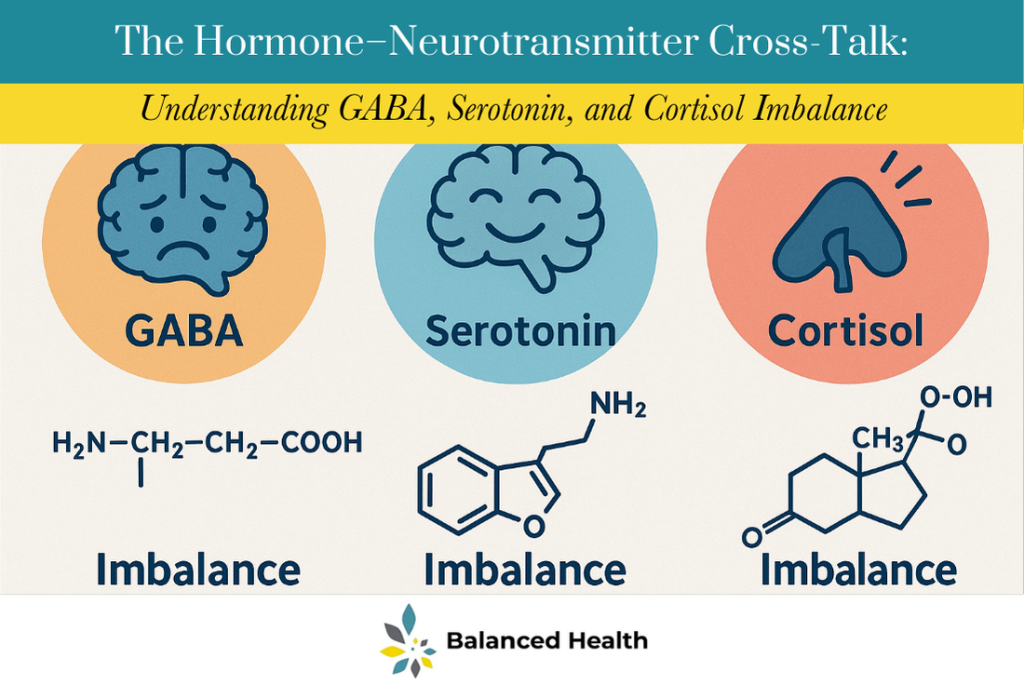
By Balanced Health, San Francisco
Hormones and neurotransmitters are often discussed separately in conventional medicine, yet the truth is, they engage in constant cross-talk that profoundly influences mental and physical health. At Balanced Health in San Francisco, we specialize in integrative care that bridges the gap between endocrine health and brain chemistry. One of the most overlooked—but critical—areas of focus is the intricate relationship between GABA, serotonin, and cortisol—and how imbalances can affect mood, sleep, stress resilience, and more.
🧠 Hormones vs. Neurotransmitters: What’s the Difference?
- Hormones are chemical messengers released into the bloodstream, affecting tissues throughout the body. Cortisol, produced by the adrenal glands, is a prime example.
- Neurotransmitters, like serotonin and GABA, are chemical messengers used by nerve cells to communicate across synapses in the brain and nervous system.
Although they act in different systems, these messengers influence each other profoundly—especially in the hypothalamic-pituitary-adrenal (HPA) axis and gut-brain axis.
🔄 The Cross-Talk: GABA, Serotonin, and Cortisol
1. GABA (Gamma-Aminobutyric Acid): The Brain’s Brake Pedal
GABA is the primary inhibitory neurotransmitter that calms neural activity. It’s essential for:
- Reducing anxiety
- Promoting deep sleep
- Regulating overactive thoughts and nervousness
Chronic stress or elevated cortisol can suppress GABA production, leaving the brain in a hyperaroused state—often seen in anxiety and insomnia.
2. Serotonin: The Mood Stabilizer
Serotonin is widely known as the “feel-good” neurotransmitter, important for:
- Regulating mood and emotional well-being
- Supporting healthy digestion
- Maintaining appetite and sleep cycles
Since 90% of serotonin is made in the gut, inflammation, poor diet, or dysbiosis can disrupt its synthesis. Cortisol, when chronically elevated, can reduce tryptophan availability (a precursor to serotonin), impacting mood regulation and resilience.
3. Cortisol: The Master Stress Hormone
Produced in response to stress, cortisol helps the body react to danger. However, persistent high cortisol levels can:
- Impair memory and cognition
- Suppress serotonin and GABA
- Disrupt circadian rhythm and sleep
- Fuel anxiety, irritability, and burnout
Cortisol’s interactions with neurotransmitters are bidirectional—it both influences and is influenced by brain chemicals like serotonin and GABA.
⚠️ Signs of GABA, Serotonin, and Cortisol Imbalance
- Feeling anxious or “wired but tired”
- Poor sleep or early morning waking
- Irritability, panic attacks, or low mood
- Craving carbs or sugar for quick serotonin boosts
- Digestive issues or IBS-like symptoms
- Brain fog and difficulty concentrating
🧬 How Balanced Health Supports Neuroendocrine Balance
At Balanced Health, we evaluate and treat the full spectrum of neuroendocrine dysfunction using advanced testing and personalized protocols:
- Saliva or DUTCH testing for cortisol rhythm and hormone output
- Neurotransmitter panels to assess GABA, serotonin, dopamine, and more
- Functional GI testing to identify gut-brain contributors like dysbiosis or leaky gut
- Targeted supplementation, including GABA precursors, adaptogens, and amino acid therapy
- Nutrigenomic insights to understand how your genes affect neurotransmitter metabolism
- Lifestyle optimization including circadian rhythm entrainment, mindfulness practices, and anti-inflammatory nutrition
🗂️ Q&A: Hormone–Neurotransmitter Imbalances
Q: Can high cortisol really lower serotonin and GABA levels?
A: Yes. Chronically high cortisol increases the enzyme tryptophan 2,3-dioxygenase (TDO), which diverts tryptophan away from serotonin synthesis. It also reduces GABA receptor sensitivity, making it harder for the brain to “slow down.”
Q: What causes cortisol dysregulation in the first place?
A: Chronic stress, poor sleep, blood sugar imbalances, inflammation, unresolved trauma, and even overexercising can all lead to HPA axis dysfunction and abnormal cortisol rhythms.
Q: Can you fix serotonin and GABA imbalances without medication?
A: Often, yes. At Balanced Health, we use amino acid precursors (like tryptophan or GABA), adaptogens (like rhodiola or ashwagandha), and nutritional strategies to restore balance naturally—though we do work alongside psychiatric professionals when needed.
Q: I’m taking an SSRI—can I still work on my serotonin levels naturally?
A: Yes, but it’s important to do so under supervision. Lifestyle, gut health, and nutrient status (like B6, magnesium, and zinc) play a major role in serotonin function and may enhance medication effectiveness.
Q: How long does it take to feel better?
A: Improvements can be seen in as little as a few weeks with the right plan, but full neuroendocrine restoration often takes 3–6 months, especially when addressing gut-brain or adrenal imbalances.
📞 Contact Balanced Health
Ready to rebalance your brain-body connection? We’re here to help you restore calm, clarity, and control.
Balanced Health
📍 1819 Union St
San Francisco, CA 94123
📞 Phone: (415) 915-5454
🌐 balancedhealthsf.com
Discover the root causes behind your mood and stress symptoms. At Balanced Health, we help you decode the complex language of hormones and neurotransmitters—so you can finally feel like yourself again.