 Balanced Health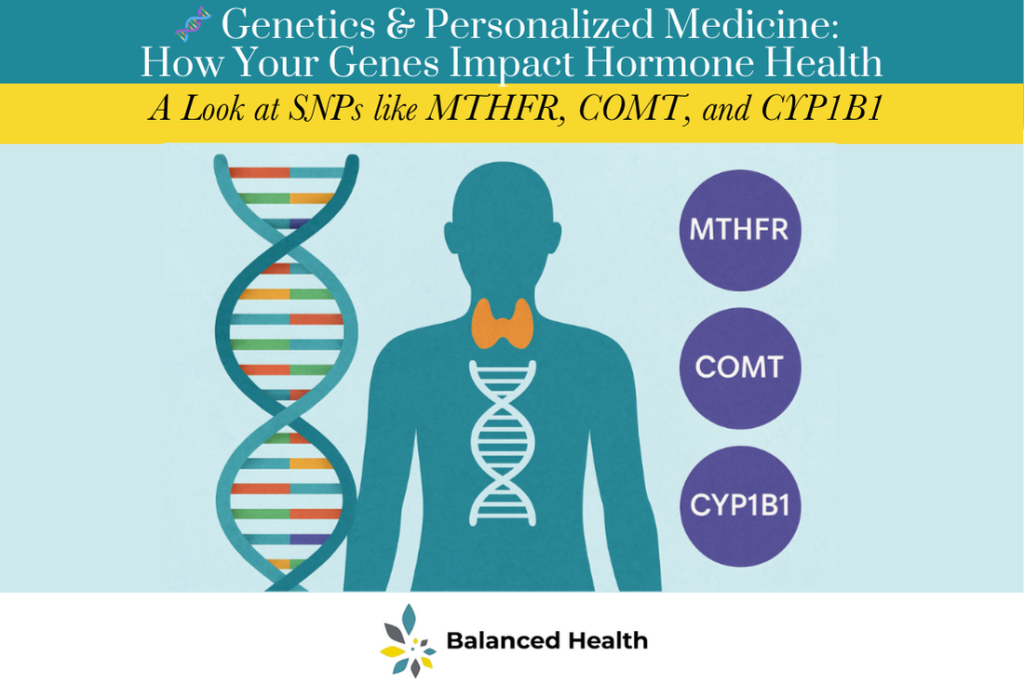
A Look at SNPs like MTHFR, COMT, and CYP1B1
Balanced Health – San Francisco, CA
https://balancedhealthsf.com | (415) 915-5454
1819 Union St, San Francisco, CA 94123
Understanding how your genes influence your hormonal health is a cornerstone of personalized medicine. At Balanced Health, we help you uncover how specific genetic variants—known as SNPs (single nucleotide polymorphisms)—can affect your body’s hormone balance, detoxification pathways, and overall vitality. Key SNPs like MTHFR, COMT, and CYP1B1 play vital roles in how you process hormones, methylate nutrients, and eliminate toxins.
In this post, we’ll explore how these gene variants function, how they impact hormonal pathways, and how we personalize wellness plans using this information to optimize your endocrine health.
🔍 What Are SNPs and Why Do They Matter?
SNPs are small genetic changes at a single DNA base pair. These tiny variations can have big effects—particularly on enzymes involved in hormone production, metabolism, and detoxification. When a SNP reduces an enzyme’s activity, it can create imbalances that may contribute to symptoms like:
- Mood swings and anxiety
- Fatigue or brain fog
- Estrogen dominance
- PMS or irregular cycles
- Poor detoxification of hormones
- Infertility or recurrent miscarriage
Understanding your unique genetic blueprint allows for more targeted, effective support using lifestyle strategies, nutraceuticals, and functional medicine.
🧬 Three Key Genes That Impact Hormone Health
1. MTHFR (Methylenetetrahydrofolate Reductase)
MTHFR is essential for methylation—a process that activates hormones, detoxifies estrogen, and produces neurotransmitters like serotonin and dopamine.
Common Variants: C677T and A1298C
Impact: Reduced methylation can lead to poor detoxification, elevated homocysteine, and neurotransmitter imbalances.
Support: Methylated B vitamins (e.g., methylfolate, B12), magnesium, choline, and lifestyle practices that reduce oxidative stress.
2. COMT (Catechol-O-Methyltransferase)
COMT breaks down catecholamines (dopamine, epinephrine, norepinephrine) and estrogen metabolites.
Common Variants: Val158Met (rs4680)
Impact: Slow COMT = estrogen buildup and increased sensitivity to stress; Fast COMT = low dopamine and reduced motivation.
Support: Balance with adaptogens, magnesium, SAMe, and calming practices like breathwork or meditation.
3. CYP1B1 (Cytochrome P450 1B1)
CYP1B1 is involved in estrogen metabolism, specifically converting estradiol into more or less harmful metabolites.
Impact: Overactivity may lead to the production of 4-OH estrogen, a metabolite linked to DNA damage and higher cancer risk.
Support: Cruciferous vegetables (DIM, sulforaphane), calcium-D-glucarate, antioxidants, and regular detoxification support.
🧪 Personalized Testing & Protocols at Balanced Health
At Balanced Health, we offer advanced genetic testing and hormone panels that provide a complete picture of your endocrine health. By analyzing your SNPs alongside saliva, blood, and urine biomarkers, we tailor your plan to your body’s unique needs.
Our protocols may include:
- Methylation and detox support
- Hormone balancing therapies
- Nutrigenomic supplementation
- Lifestyle and dietary adjustments
- Stress resilience techniques
This integrative approach helps you move from hormone imbalance to optimal vitality—guided by your genes.
💬 Q&A: Genetics & Hormone Health
Q: Can genetic testing really help with hormone issues?
A: Yes. SNP analysis provides insights into how your body metabolizes and regulates hormones. Knowing your genetic tendencies helps us intervene with precision—whether you’re struggling with estrogen dominance, anxiety, or fertility issues.
Q: Is it safe to supplement based on my genes?
A: Absolutely—when done under medical supervision. Some SNPs (like MTHFR) require methylated nutrients, but taking the wrong form or dose can backfire. That’s why we customize everything based on your labs and symptoms.
Q: How do genes like COMT impact mood and stress?
A: COMT regulates dopamine and estrogen breakdown. If your COMT is slow, you may feel overwhelmed or sensitive to hormonal shifts. If fast, you may have trouble focusing or staying motivated. Understanding this allows us to support your brain chemistry naturally.
Q: Can I change how my genes work?
A: You can’t change your DNA—but you can influence gene expression through epigenetics. Diet, stress, sleep, exercise, and toxin exposure all impact how genes like MTHFR or CYP1B1 function.
Q: How is your testing different from 23andMe?
A: While 23andMe gives raw genetic data, we provide clinical interpretation. We focus on actionable insights for your hormonal health, not just ancestry or broad wellness reports.
📞 Ready to Personalize Your Hormone Health?
At Balanced Health, we believe your DNA holds powerful clues to healing. Whether you’re facing chronic fatigue, hormonal imbalances, or emotional swings—we can help decode your genetics and create a targeted plan for wellness.
Contact Us Today to Get Started:
📍 1819 Union St, San Francisco, CA 94123
📞 (415) 915-5454
🌐 balancedhealthsf.com
Discover how personalized medicine can transform your hormones—and your health.